Customer support has always been a balancing act. Businesses need to respond quickly, solve problems accurately and keep customers satisfied, but building a large support team can be expensive — especially for SMEs.
This is where artificial intelligence (AI) is changing the conversation.
AI-powered customer support tools can now answer common questions, classify enquiries, suggest replies and even provide customers with assistance around the clock. With these capabilities becoming more accessible, it is easy to ask: Can a bot really replace a support team?
The answer is more complicated than simply “yes” or “no”.
For most businesses, the bigger opportunity may not be replacing the support team entirely. Instead, it is about using AI to help a smaller team handle more work, respond faster and spend more time on the issues that actually require human attention.
AI is particularly effective when customer support involves repetitive, predictable tasks.
For example, businesses receive many enquiries that can be answered using information they already have. Customers may ask about operating hours, pricing, delivery status, payment methods, product features or how to perform a particular action. Instead of requiring an employee to answer each question individually, an AI chatbot can provide an immediate response based on the company’s available information.
AI can also help with ticket classification and routing. When a customer submits a support request, AI can identify what the issue is about and direct it to the appropriate person or department. A technical issue can go to the technical team, while a billing enquiry can be routed to finance or accounts.

Another useful application is reply assistance. Rather than writing every response from scratch, support employees can use AI to suggest a reply based on the customer’s message. The employee can then review, edit and send it. This can reduce the time spent on repetitive writing while still keeping a human involved.
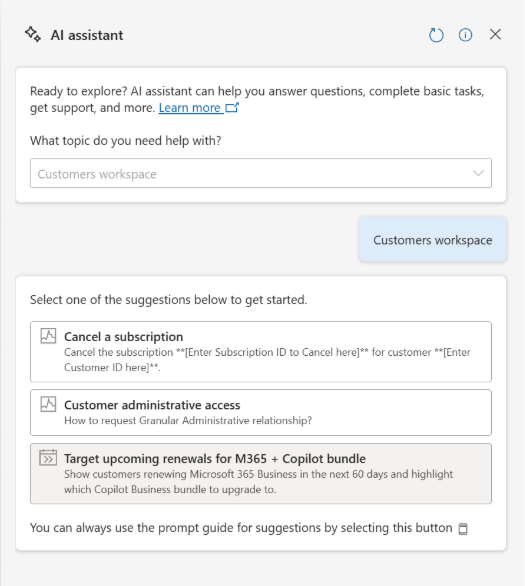
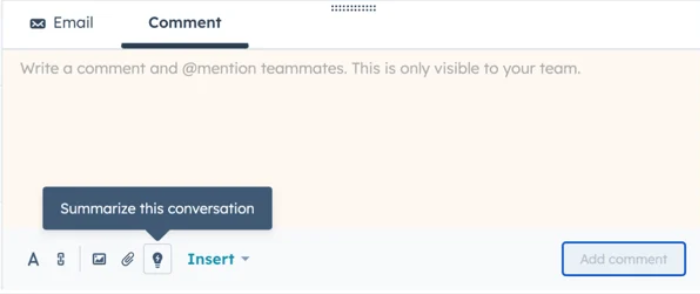
AI can also summarise customer conversations. If a customer has exchanged several messages with the company, an AI system can provide a short summary of the issue, what has already been discussed and what action may be required. This is particularly useful when a case is transferred between employees, as the next person does not have to read through an entire conversation before understanding the situation.
Perhaps one of the biggest advantages is availability. An AI support assistant can provide 24/7 first-level support, even outside normal working hours. Customers do not necessarily have to wait until the next business day just to get an answer to a basic question.

While AI is becoming increasingly capable, customer support is not simply about providing answers. Some cases require judgement, context and empathy, which are difficult to automate completely.
Consider an angry customer whose issue has not been resolved after several attempts. Providing another standardised response may only make the situation worse. A human employee can recognise frustration, adjust their communication style and decide how best to handle the situation.
There are also complex troubleshooting cases where the solution is not obvious. A customer may describe an unusual problem involving multiple factors, or the issue may fall outside the scenarios covered by the company’s existing knowledge base. In these situations, an experienced support employee may need to investigate the problem, ask follow-up questions and make a judgement call.
AI can also struggle with exceptions. Businesses rarely operate entirely according to fixed rules. There may be special circumstances where an employee needs to decide whether an exception should be made for a particular customer.
And then there is the human relationship.
For some businesses, customer support is more than simply resolving tickets. It is part of the overall customer experience. Long-term customers may value speaking to someone who understands their business, remembers previous issues and can provide advice beyond a standard answer.
That is difficult to replace with a bot.
This is perhaps a more useful way for SMEs to think about AI in customer support.
Instead of asking, “Can AI replace my support team?”, ask:: “Can one support employee equipped with AI handle the workload that previously required several people?” The answer could increasingly be yes.
Imagine a support employee who previously spent much of the day answering repetitive questions. With AI handling common enquiries, the employee can focus on more complicated cases.
Instead of manually reading every incoming ticket, AI can classify and prioritise them. Instead of writing every response from scratch, AI can prepare a draft. Instead of reading through a long customer conversation, the employee can start with an AI-generated summary.
The employee is still responsible for the final decision, but AI reduces the amount of routine work surrounding it.
This changes the role of the support team. Employees can spend less time on repetitive administration and more time on problem-solving, customer relationships and cases where human judgement matters.
For an SME that does not have the resources to maintain a large support department, this can make a significant difference.
The most practical approach for many businesses is therefore not AI versus humans, but AI plus humans.
AI can take care of high-volume, repetitive and predictable tasks, while employees handle complex, sensitive or unusual situations. When a conversation goes beyond what the AI can confidently handle, it can be escalated to a human.
This creates a support model where customers can get immediate assistance for simple questions without removing access to a real person when they need one.
It also means businesses do not necessarily have to start with a highly sophisticated AI system. SMEs can begin with smaller use cases, such as answering frequently asked questions, summarising tickets or helping employees draft responses, and gradually expand as they understand where AI provides the most value.
For most businesses, probably not completely — and that may not even be the goal.
The value of AI in customer support is not necessarily measured by how many employees it can replace. It can be measured by how much more effectively a support team can work.
A business that uses AI well may be able to respond to customers faster, provide support outside office hours, reduce repetitive workloads and allow employees to focus on higher-value problems.
The future of customer support may therefore be less about choosing between humans and AI, and more about finding the right balance between the two.
The question is not whether AI can do everything your support team does. It is whether AI can take enough of the repetitive work off their hands to let your team focus on what AI cannot.
Image Source:
.png)